

Choosing the right moisturizer can completely change how your skin looks and feels. Whether your skin is dry, oily, combination, sensitive, or dehydrated, the right formula helps maintain hydration, support the skin barrier, and keep your complexion comfortable and healthy-looking.
However, finding a suitable moisturizer is not simply about picking the most popular product. Different skin types need different textures, ingredients, and levels of hydration. A rich cream that works beautifully for dry skin may feel too heavy on oily skin, while a lightweight gel may not provide enough nourishment for severely dry or flaky skin.
Understanding your skin type and learning how different ingredients work can make the process much easier.
This guide explains how to choose moisturizer for skin type, which ingredients to look for, common mistakes to avoid, and how to include moisturizer correctly in your daily skincare routine.
Why Is Moisturizer So Important for Healthy Skin?
Moisturizer is one of the most important steps in a basic skincare routine because it helps support the skin’s natural protective barrier.
The skin barrier is the outermost layer of your skin. It helps protect against environmental irritants while reducing excessive water loss. When this barrier becomes damaged or weakened, the skin may become dry, rough, flaky, tight, or more sensitive.
One important process involved is transepidermal water loss (TEWL), which refers to water moving from the deeper layers of the skin through the epidermis and evaporating from the surface.
A well-formulated moisturizer can help reduce moisture loss by providing a combination of:
- Humectants, which attract and hold water
- Emollients, which soften and smooth the skin
- Occlusive ingredients, which help reduce water loss
This is why moisturizing is not only about creating a temporary soft feeling. Consistent moisturization can help maintain comfortable, healthy-looking skin and support the skin barrier.
How to Choose Moisturizer for Your Skin Type
There is no single moisturizer that is perfect for everyone. The ideal product depends on how much oil your skin produces, how easily it becomes irritated, and what concerns you want to address.
Best Moisturizer for Dry Skin
Dry skin often feels tight, rough, or uncomfortable, particularly after cleansing. It may also develop visible flaking, fine lines caused by dehydration, or rough patches.
If you are looking for the best moisturizer for dry skin, consider a richer cream containing both hydrating and nourishing ingredients.
Useful ingredients include:
- Ceramides
- Hyaluronic acid
- Glycerin
- Shea butter
- Squalane
- Nourishing emollients
A ceramide moisturizer for barrier repair can be particularly useful when dryness is associated with a weakened skin barrier.
People with very dry skin may also benefit from applying a richer moisturizer at night. A night cream for dry skin can provide a more nourishing layer while you sleep.
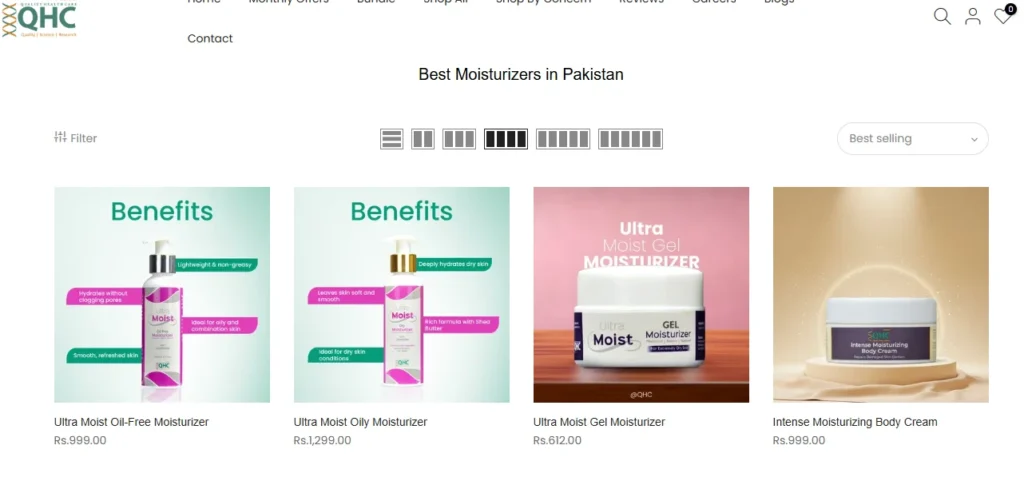
If you want to explore different options, you can browse the QHC moisturizer collection for formulas suited to different skincare needs.
Best Moisturizer for Oily Skin
Oily skin produces more sebum, but that does not mean it does not need hydration.
One of the most common skincare mistakes is assuming that moisturizer should be avoided if the skin feels oily. In reality, dehydrated oily skin can feel tight while still producing excess oil.
For people searching for the best moisturizer for oily skin, lightweight formulas are usually a comfortable choice.
Look for:
- Lightweight gel-creams
- Oil-free formulas
- Non-comedogenic products
- Hyaluronic acid
- Glycerin
- Niacinamide
A niacinamide moisturizer for oily skin can provide hydration while niacinamide may also help support a balanced-looking complexion and reduce the appearance of excess oil.
If you are prone to clogged pores or breakouts, choosing a non-comedogenic moisturizer for acne-prone skin can be a sensible option.
Moisturizer for Sensitive Skin
Sensitive skin requires extra care because it may react easily to fragrances, harsh ingredients, or excessive exfoliation.
When choosing a moisturizer for sensitive skin, look for a relatively simple formula that is fragrance-free and contains soothing ingredients.
Helpful options can include:
- Colloidal oatmeal
- Aloe vera
- Allantoin
- Ceramides
- Glycerin
- Squalane
Colloidal oatmeal is particularly well known for its soothing and moisturizing properties. It can be useful for people whose skin is easily irritated or uncomfortable.
Those with eczema-prone skin should be especially careful when introducing new products. If you have persistent irritation, cracking, or inflammation, professional dermatological advice may be appropriate.
Moisturizer for Combination Skin
Combination skin can be challenging because different parts of the face may have different needs.
The forehead, nose, and chin may become oily, while the cheeks feel dry or normal.
A balanced lotion or lightweight gel-cream can work well for many people with combination skin. Instead of applying a very thick layer everywhere, adjust the amount according to how different areas of your face feel.
For example, you might use a lighter layer around an oily T-zone and slightly more moisturizer on dry cheeks.
Dehydrated Skin vs. Dry Skin: What’s the Difference?
Dry and dehydrated skin are often used interchangeably, but they are not exactly the same.
Dry skin generally refers to a skin type that produces less oil than needed to maintain a comfortable surface.
Dehydrated skin, on the other hand, lacks sufficient water.
A person with oily skin can therefore still have dehydrated skin.
Signs of dehydration may include:
- Tightness
- Dull appearance
- Fine lines that look more noticeable
- Rough texture
- Reduced bounce
- Makeup settling into fine lines
If your goal is to learn how to hydrate dry skin naturally, remember that topical skincare is only part of the picture. Maintaining adequate fluid intake, eating a balanced diet, avoiding excessively hot water, using gentle cleansers, and moisturizing regularly can all support overall skin health.
Key Ingredients to Look for in a Good Moisturizer
Understanding ingredients makes it easier to choose a product based on your actual needs instead of marketing claims.
Hyaluronic Acid and Glycerin for Hydration
Hyaluronic acid is a humectant that attracts water and helps maintain hydration at the skin’s surface.
A hyaluronic acid moisturizer can be particularly appealing for dehydrated skin because it combines hydration with the other moisturizing components in the formula.
Glycerin is another effective humectant commonly found in moisturizers. Together, ingredients such as hyaluronic acid and glycerin can help give skin a softer, more hydrated appearance.
Ceramides for Barrier Repair
Ceramides are naturally occurring lipids found in the outer layer of the skin.
They help support the structure and function of the skin barrier. When the barrier becomes compromised, moisture can escape more easily and skin may feel dry or irritated.
This is why a skin barrier repair cream containing ceramides can be useful for people experiencing persistent dryness or barrier-related discomfort.
Niacinamide for Oily and Uneven Skin
Niacinamide, also known as vitamin B3, is a versatile skincare ingredient.
Depending on its formulation and concentration, it can help support the skin barrier, improve the appearance of uneven skin tone, and help manage the appearance of excess oil.
A niacinamide moisturizer for oily skin can therefore be a convenient way to combine hydration with additional skincare benefits.
Shea Butter and Squalane for Nourishment
Shea butter is a rich emollient that can help soften dry and rough skin. It is often included in richer creams intended for dry or very dry skin.
Squalane is another popular emollient. It has a lightweight texture and can help leave the skin feeling smooth and comfortable.
For someone searching for a nourishing moisturizer without an extremely heavy sensation, a formula containing squalane may be worth considering.
Colloidal Oatmeal for Sensitive Skin
Colloidal oatmeal is finely ground oatmeal formulated for topical use. It is commonly used in products designed to soothe dry and irritated skin.
It can be particularly appealing for people with sensitive or eczema-prone skin, although anyone with persistent skin symptoms should consider professional advice rather than relying solely on cosmetics.
How to Layer Moisturizer in Your Skincare Routine
Even the best moisturizer will work most effectively when it is used consistently and in the right place within your routine.
A simple morning routine can follow this order:
Cleanser → Toner → Serum → Moisturizer → SPF
At night, you can use:
Cleanser → Toner → Serum/Treatment → Moisturizer
Cleanser
Begin with a gentle cleanser that removes dirt, excess oil, sunscreen, and other buildup without leaving the skin feeling excessively tight.
Toner
Toner is optional. If you use one, choose a product that suits your skin and does not cause unnecessary dryness or irritation.
Serum
Serums can target specific concerns such as dehydration, dullness, uneven tone, or visible signs of aging.
For example, a hydrating serum can be followed by a moisturizer to help maintain a comfortable level of skin hydration.
Moisturizer
Apply moisturizer evenly across the face and neck if appropriate for the product.
It is generally helpful to moisturize when the skin is slightly damp rather than waiting until it becomes completely dry. The goal is to help retain water at the skin’s surface rather than simply relying on the moisturizer to add water by itself.
SPF in the Morning
Sunscreen should be the final step of your morning skincare routine.
An SPF moisturizer can be convenient for some morning routines, although sunscreen still needs to be applied adequately to provide the protection indicated on its label.
Common Moisturizer Mistakes to Avoid
1. Using Too Little Product
Applying only a tiny amount may leave areas of your face insufficiently moisturized.
You do not need to cover your skin with a thick layer, but use enough to create an even, comfortable coating.
2. Skipping Moisturizer Because Your Skin Is Oily
Oily skin still needs water and barrier support.
Instead of eliminating moisturizer, choose a lightweight, non-comedogenic formula that feels comfortable on your skin.
3. Using the Same Formula in Every Season
Your skincare needs can change with the weather.
During hot and humid weather, a lightweight gel or lotion may feel more comfortable. During cold and dry weather, your skin may benefit from a richer cream.
This seasonal adjustment is particularly important in winter skincare, when cold air and indoor heating can contribute to dryness.
4. Applying Moisturizer Only When Your Skin Feels Dry
Waiting until your skin becomes uncomfortable may make it harder to maintain consistent hydration.
Moisturizing regularly is generally more useful than treating dryness only after it appears.
5. Choosing Products Based Only on Marketing Claims
Words such as “glowing,” “natural,” “luxurious,” or “deep hydration” can sound attractive, but they do not tell you everything about how a product will perform.
Read the ingredient list and consider whether the formula actually matches your skin type.
Expert Tips for Getting Better Results From Your Moisturizer
Match the Texture to Your Skin
Texture matters almost as much as ingredients.
Dry skin often prefers creams or richer formulas, while oily skin may feel more comfortable with a gel or lightweight lotion.
Consider Multi-Benefit Products
If you want to simplify your routine, products that combine several useful functions can be convenient.
For example, an appropriately formulated morning moisturizer with SPF can combine moisturization and sun protection. However, make sure you apply enough product to achieve the intended sunscreen protection.
Don’t Change Products Too Frequently
Switching moisturizers every few days makes it difficult to determine what is actually working.
Unless a product causes irritation or another obvious problem, give your routine enough consistency to evaluate how your skin responds.
Patch Test New Products
If your skin is sensitive or reactive, introduce new products carefully. Testing a product on a small area first can help you identify potential irritation before applying it more broadly.
How to Treat Dry Flaky Skin With a Simple Routine
If your skin is dry and flaky, avoid the temptation to scrub aggressively.
Instead, focus on restoring comfort and supporting the skin barrier.
A simple approach is:
Gentle cleanser → Hydrating serum → Moisturizer → SPF
At night, use a richer moisturizer if needed.
If your skin is severely flaky, painful, cracked, persistently red, or itchy, the issue may be more than ordinary dryness. In such cases, consult a dermatologist rather than continuously adding new skincare products.
What Is the Best Moisturizer for Dry Sensitive Skin?
People with both dry and sensitive skin need to balance hydration with gentleness.
The best moisturizer for dry sensitive skin is generally one that provides sufficient moisture without unnecessary potential irritants.
Look for ingredients such as ceramides, glycerin, squalane, and colloidal oatmeal. A fragrance-free formula may also be preferable for easily irritated skin.
Avoid assuming that “rich” automatically means “better.” A product can be highly nourishing but still unsuitable if it causes irritation.
What About Moisturizer for Dry Acne-Prone Skin?
Dryness and acne can occur together, particularly when acne treatments make the skin feel dry or irritated.
Someone looking for a moisturizer for dry acne-prone skin should consider a lightweight, non-comedogenic formula that provides hydration without feeling excessively occlusive.
Ingredients such as glycerin, hyaluronic acid, ceramides, and niacinamide can be useful depending on the overall formulation.
The goal is not to eliminate all oils from your routine. It is to find a balance between hydration, barrier support, and pore-friendly ingredients.
Final Thoughts
Finding the right moisturizer starts with understanding your skin rather than following every skincare trend.
Dry skin may need richer formulas containing ceramides, shea butter, squalane, and hyaluronic acid. Oily skin often prefers lightweight, non-comedogenic textures with ingredients such as niacinamide and glycerin. Sensitive skin may benefit from fragrance-free formulas containing colloidal oatmeal, aloe vera, or allantoin, while combination skin generally needs a balanced approach.
Most importantly, moisturizer should be viewed as a fundamental part of maintaining healthy-looking skin—not simply a product used when your face feels dry.
With the right formula, consistent application, seasonal adjustments, and daily sun protection, you can support your skin barrier, improve hydration, and create a smoother, more comfortable complexion.
And while a moisturizer can contribute to a naturally dewy skin appearance, healthy-looking skin is ultimately about consistency rather than perfection. The best skincare routine is one that matches your skin’s needs and is simple enough to follow every day.